What I Was Really Missing
On tortillas, memory, and how culture survives
After writing about my early years in Rhode Island and about the absence, the searching, and the eventual arrival—I kept thinking about tortillas. Not as a story I had already told, but as something that refused to let go of me. What stayed wasn’t just the hunger, or the cafeteria, or the can. It was the realization that food had been the first language my body used to understand loss, and later, belonging. This is not the story of finding tortillas. It’s the story of what they came to mean.
I didn’t know, at the time, that missing tortillas would become a way of understanding everything else I was missing.
When I first arrived in Rhode Island for college, the absence showed up first in the cafeteria. Not just in the food—which was bland, processed, unfamiliar—but in what wasn’t there. No rice, no beans, and none of the foods that carry memory, that settle your body, that tell you without words that you belong somewhere. College food is famously bad, but this felt different. My body knew it before my mind could name it.
I was hungry for something specific. Not just food but culture and something familiar.
I kept looking for tortillas, the fresh ones. And when I couldn’t find them, I did what you do when you’re young and far from home: I compromised and bought what was available.
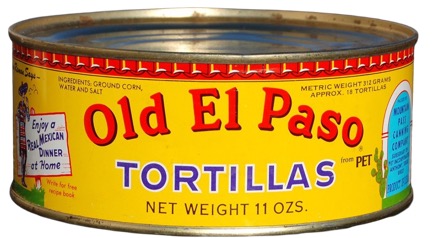
Old El Paso, in a can! I had never seen canned tortillas in my life. I remember holding that thin round can and thinking, This can’t be right. But, yeah, I was desperate.
I took out a popcorn popper in my dorm room and warmed them up, flipping them back and forth like it was a comal. My roommate and others hovered around me, curious – they had never tasted a tortilla before. I was excited, but then immediately crushed. WhenI took a bite, they were awful, tasted like cardboard! In that moment, I realized that I didn’t want that to be anyone’s introduction to tortillas, so I wouldn’t let the others taste them.
When I went home for Christmas that year, I told my mother the tortilla story, and she was aghast! Soon after I returned to school, a large box arrived in the mail from home—a dozen tortillas, fresh and handmade, just for me. Only then was I able to share some with my roommates. But even then, the emptiness remained. I had food, yes—but I still hadn’t found other Mexicans.
I didn’t just miss tortillas. I missed a way of being in the world.
That desperation stayed with me. It followed me later in life, into my searching. So, when I heard, years later, that a Mexican market called Sánchez Market had opened, I went straight there. I didn’t hesitate, I was always looking. That market mattered to me not just because it sold Mexican food, but because it existed. Because it said, We’re here now.
That’s where I met Don Enrique Sánchez. He had moved from New York in the early 1990s and had dreamed of opening a tortillería so the tortillas could be fresh and so he wouldn’t have to keep driving to New York to bring them to Rhode Island. I helped him navigate City Hall, permits and all the required paperwork. But, the neighbors pushed back because the machine was too big and they did not want the neighborhood to be too commercial. The tortillería didn’t last, but the market did.
Even that mattered. That market mattered to me not just because it sold Mexican food, but because it existed. Because it said, We’re here now.
Years later, watching two of his grandsons—young Mexican men—win elected office, I felt the arc of it all. From no tortillas to a market, to a seat at the table. From absence to presence. From surviving to shaping the future.
Later, what was my private memory became something shared. I didn’t know then that this story—this longing, this searching—would end up on stage.
What was my private memory became something shared.
When Orlando was asked to write La Broa’, he sat and listened to my story, then allowed it to breathe differently. In the play, the character who represents me—Ana—lets her roommate taste the tortillas. In real life, I never did. But theater does what memory sometimes can’t. It makes room for connection.
On stage, the tortillas become a shared experience. The two roommates laugh and then choke and spit them out together. What was once an isolating experience became communal. The food opened a door to deeper conversation about home and about what we carry with us when we leave.
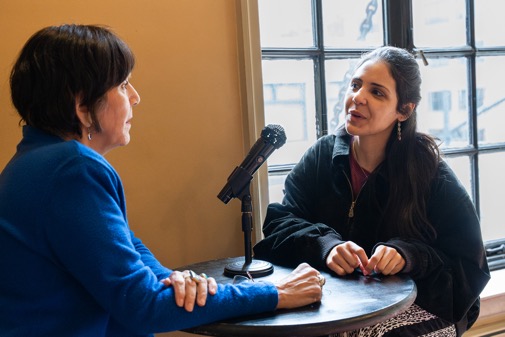
Later I sat with Rosalyn Tavarez—who played me on stage—and I asked her to reflect about being in the play. She brought up “the tortilla scene,” telling me how fun it was, and also how absurd. Tortillas in a can? she laughed. And she was right; it is absurd but also true. Hearing her speak about it—about tasting them, spitting them out, laughing with the audience—I realized something else: What once felt sad, even embarrassing, had transformed. The desperation became humor. The hunger became recognition. The private memory became something shared.
That’s how culture survives.
Culture survives through markets and kitchens. Through mothers who send fresh tortillas through the mail, like mine did. Through people who fight City Hall for permits that don’t last but still matter. Through plays that tell the truth even when they bend the facts. Through actors who embody your story and reflect it back to you with tenderness.
I didn’t just miss tortillas, I missed a way of being in the world. And over time—through food, through community, through art—I found pieces of it again. Not all at once, and not perfectly. But enough to know that what we search for has a way of finding us back. Sometimes it could found in a can or on a stage. And sometimes in the echo of someone else telling your story—and realizing it no longer belongs only to you.
How La Broa’ Began ➤